
Belém is one of the easiest parts of Lisbon to treat as a checklist.
Jerónimos Monastery. Pastéis de Belém. Monument to the Discoveries. Belém Tower.
They’re all close together, so it’s tempting to move from one pin to the next without thinking much about how they connect.
But Belém makes more sense as one story.
This half-day walk starts beside Belém Palace, passes through the religious and royal centre of the district, then heads towards the Tagus and the monuments connected to Portugal’s maritime past.
The route itself is only 2.5 kilometres and almost completely flat. Most of your time will be spent stopping, looking around and going inside.
Route at a glance
Easy. The route is almost completely flat.
Morning or early afternoon.
Mosteiro dos Jerónimos and Torre de Belém are closed on Mondays. Entry to Igreja de Santa Maria de Belém is free; the monastery cloister requires a paid ticket.
If you go inside the cloister, stop for pastéis and visit the tower, give yourself the full four hours.
01Start at Monumento a Afonso de Albuquerque
Start in the formal garden opposite Belém Palace.
At its centre stands Afonso de Albuquerque, one of the key figures in Portugal’s expansion into the Indian Ocean in the early 16th century.
He was a military commander, governor of Portuguese India and one of the people responsible for turning Portugal’s sea routes into a network of fortified ports and trading bases.
From the garden, you can already see your next stop across the road: the pale pink Palácio Nacional de Belém.
02Palácio Nacional de Belém
The palace has been the official residence of the President of Portugal since the early 20th century, but its history began long before the republic.
For centuries, this area was associated with royal estates and residences outside the old city. Belém was once a separate municipality and only became part of Lisbon in 1885.
The palace itself passed through the hands of the Portuguese royal family before becoming the presidential residence.
From here, continue west towards one of the most famous pastry shops in Portugal.
03Pastéis de Belém
You’ll probably notice the queue before you see the sign.

Pastéis de Belém has been making its custard tarts since 1837, using a recipe traditionally linked to the nearby Jerónimos Monastery.
After Portugal’s religious orders were dissolved in the 19th century, monasteries lost their traditional sources of income. The story of these pastries is tied to that change: a recipe associated with the monastery eventually found a new home in the bakery next door.
You can stop now or come back later. The next two stops belong to the same complex, but they’re worth treating separately.
04Igreja de Santa Maria de Belém
The church is part of the Jerónimos complex, but it deserves its own stop.
Inside are the tombs of Vasco da Gama and Luís de Camões.
Da Gama’s voyage opened the direct sea route from Europe to India. Camões later turned Portuguese expansion into literature in Os Lusíadas, the epic poem that became central to Portugal’s national mythology.
Look up at the ceiling before you leave. Slender columns spread into an elaborate stone vault overhead, making the enormous interior feel unexpectedly light.
Next door, the same decorative language becomes even more intricate.
05Mosteiro dos Jerónimos
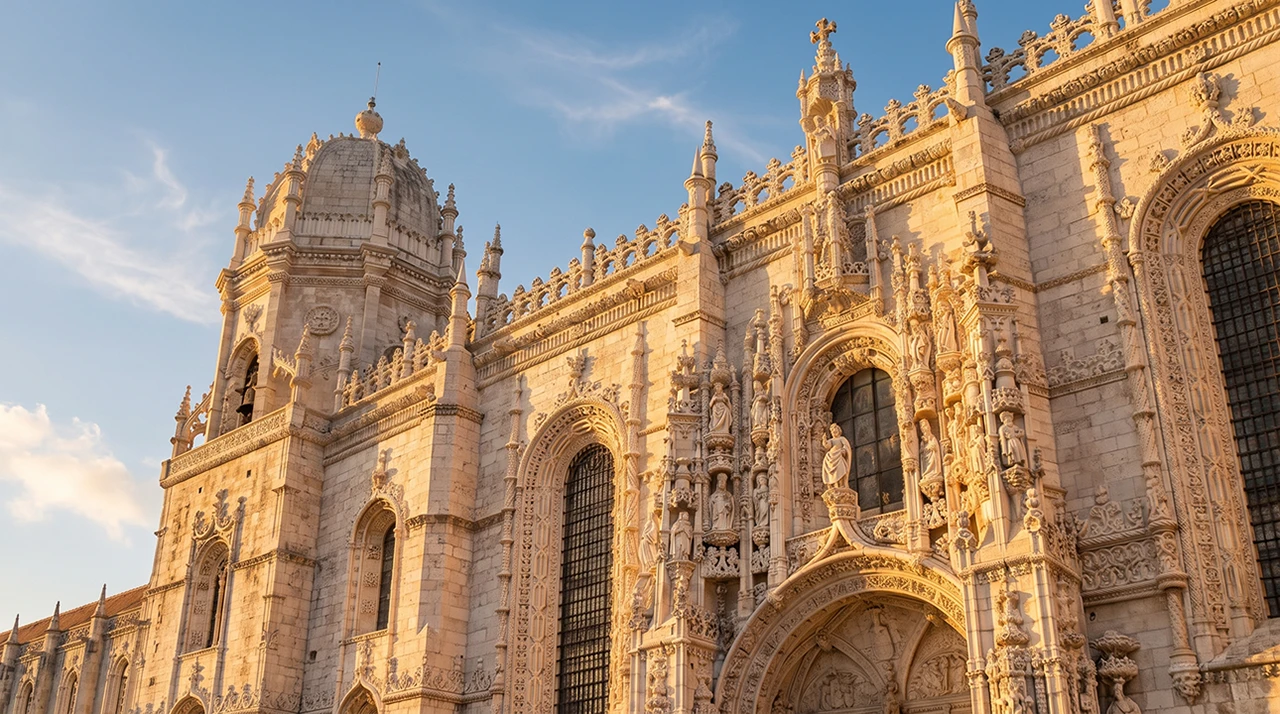
Mosteiro dos Jerónimos was built during the reign of Manuel I, when Portugal’s overseas trade was bringing extraordinary wealth into Lisbon.
Together with Torre de Belém, it forms part of a UNESCO World Heritage Site.
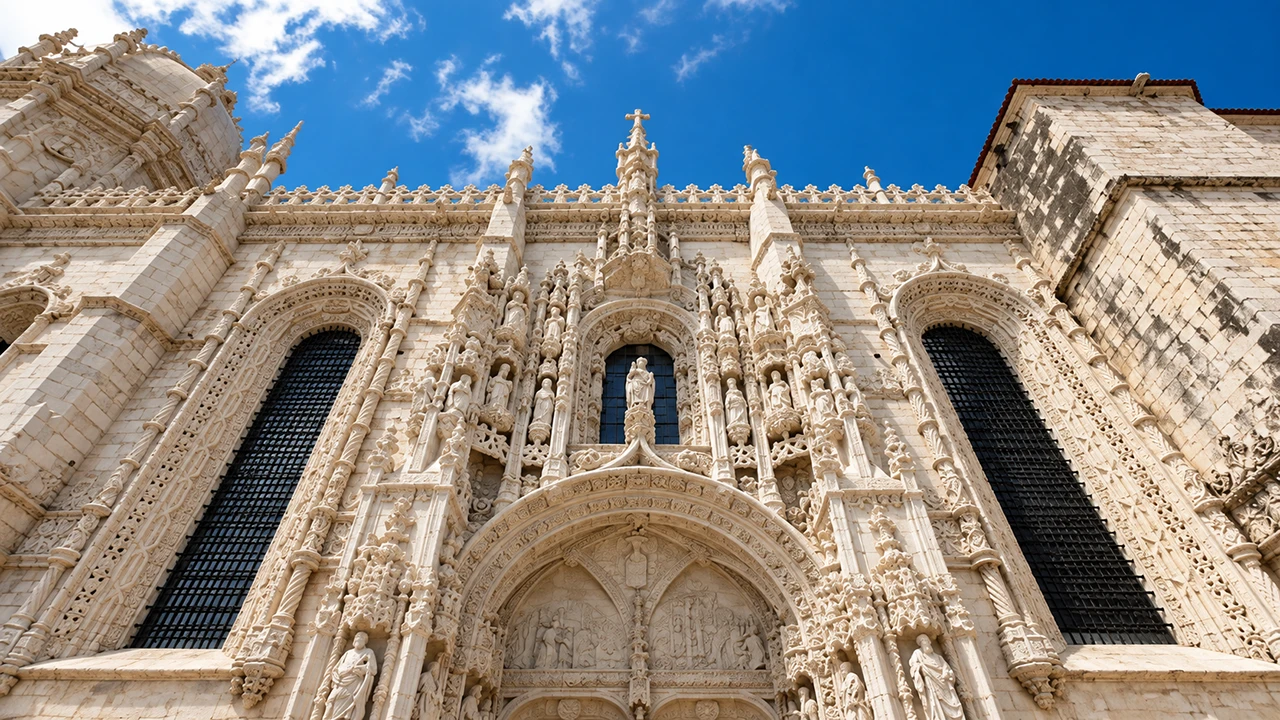
The cloister is worth slowing down for.
Look closely at the stonework and you’ll find twisted ropes, plants, royal emblems and armillary spheres worked into arches and columns. No two stretches feel quite the same.
This is the style now known as Manueline, and here the maritime imagery is carved directly into the architecture.
If you want to see the cloister, you’ll need a separate paid ticket.
06Praça do Império
Step out of Jerónimos and the space suddenly opens.
Praça do Império stretches between the monastery and the riverfront, with formal gardens and a large central fountain.
It looks as if it has always belonged to Jerónimos, but it’s much newer. The square was created in the 20th century as Belém was reshaped into a monumental setting for exhibitions and national commemorations.
Cross the gardens towards the Tagus.
From here, the route moves from buildings created during Portugal’s maritime expansion to monuments built much later to remember it.
07Rosa dos Ventos — the compass rose
When you reach the waterfront, look down.
The enormous Rosa dos Ventos spreads across the pavement in front of Padrão dos Descobrimentos.
The compass rose surrounds a world map marked with routes and places connected to Portuguese voyages.
It’s difficult to understand its scale from the edge, so walk across it. Countries, dates and routes that look like details from a distance become large enough to stand on.
Then look up.
08Padrão dos Descobrimentos
Padrão dos Descobrimentos rises beside the Tagus like the prow of a ship.
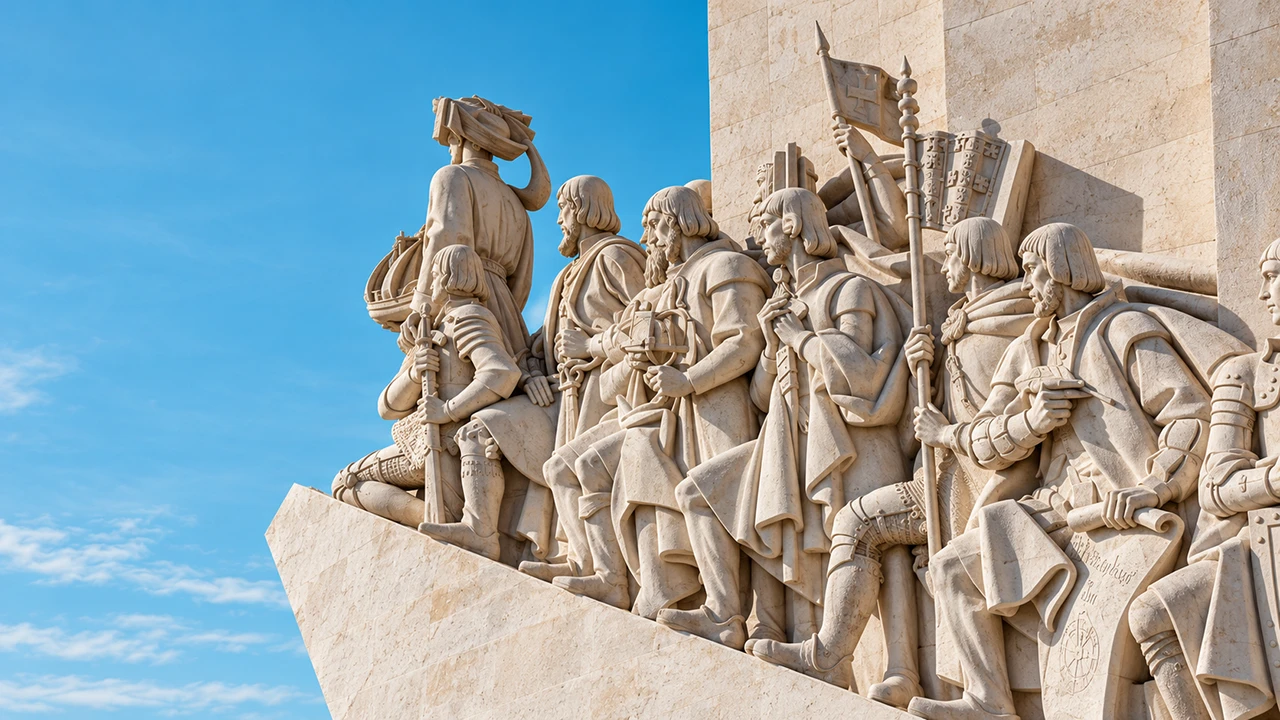
Along both sides are figures connected to Portuguese navigation, cartography, religion, warfare and exploration. At the front stands Infante D. Henrique — Prince Henry the Navigator.
The monument can easily be mistaken for something much older.
The permanent version was completed in the 20th century, centuries after the voyages it commemorates. That gives it a very different relationship with the past from Jerónimos.
The monastery was built during Portugal’s expansion.
Padrão dos Descobrimentos shows how Portugal later chose to represent that period.
From here, follow the river west towards the tower.
09Finish at Torre de Belém
Torre de Belém stands at the edge of the Tagus, where it once formed part of Lisbon’s river defences.
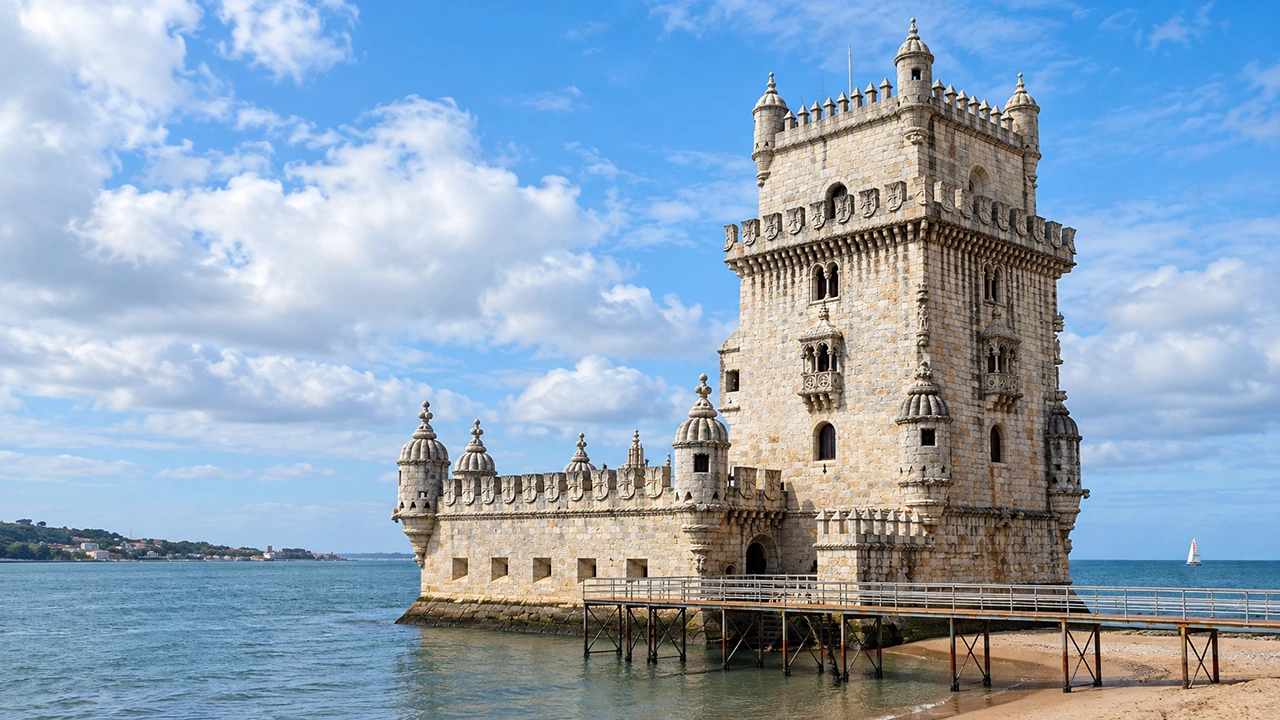
The tower was built in the early 16th century, and its military function didn’t stop its builders from covering it with Manueline decoration.
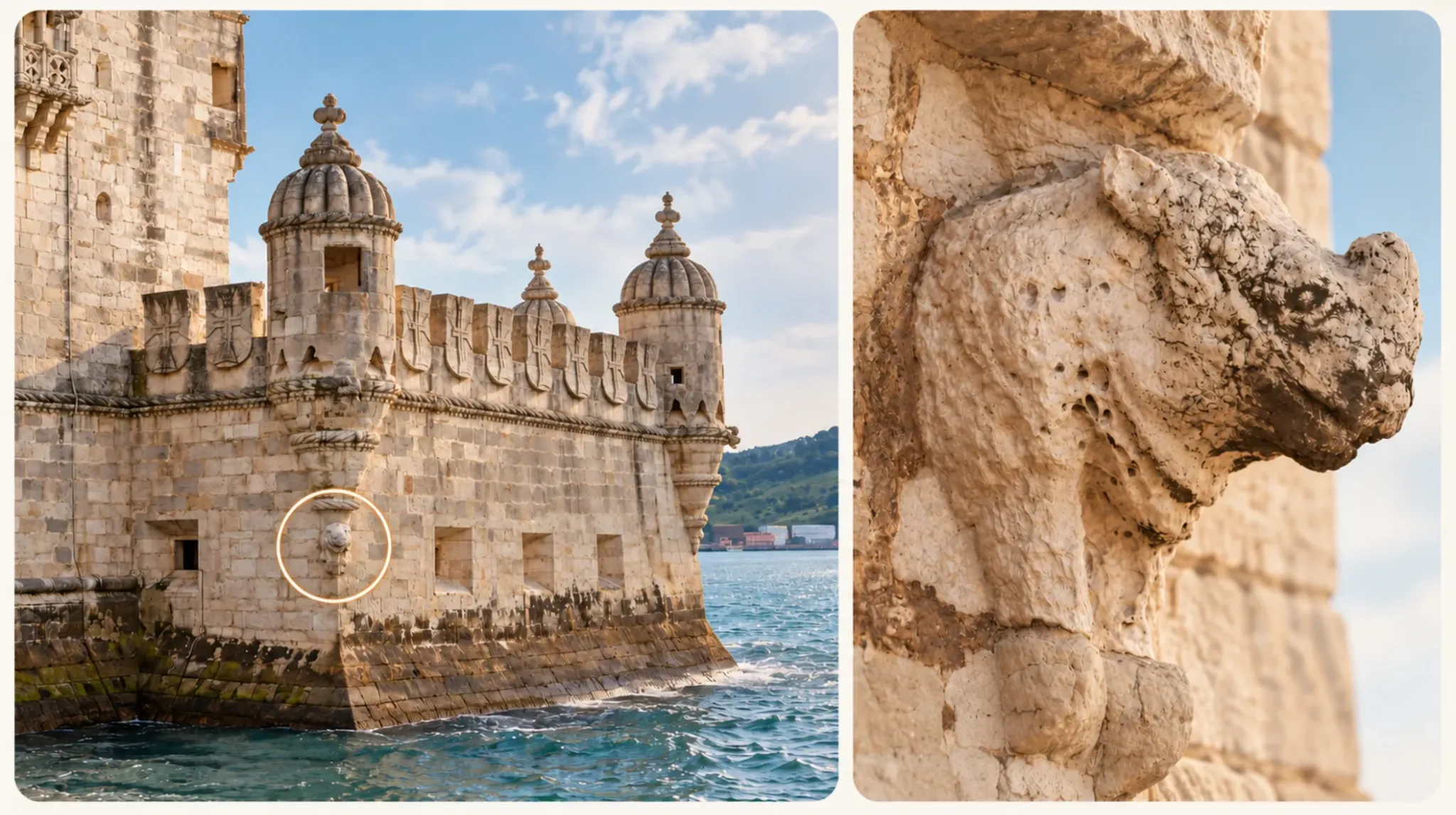
Before you leave, look carefully at the western side of the tower.
Under one of the small turrets is something unexpected: a carved rhinoceros.
It refers to a real rhinoceros brought to Lisbon in 1515, an animal that caused a sensation across Europe because almost nobody there had seen one alive.
It’s small enough to miss unless you know where to look.
If you’ve still got time, continue along the waterfront from here or walk back towards the cafés and gardens around Jerónimos.
Don’t just follow the pins
You can walk every metre of this route with Google Maps.
But a pin won’t tell you why stone ropes cover Jerónimos, why Vasco da Gama and Camões lie inside the same church, or where to look for the rhinoceros hiding on Belém Tower.
Those are the stories Nadoloni adds to the walk.
Two self-guided audio walks, 89 stops, and the first five stories on each route free.