
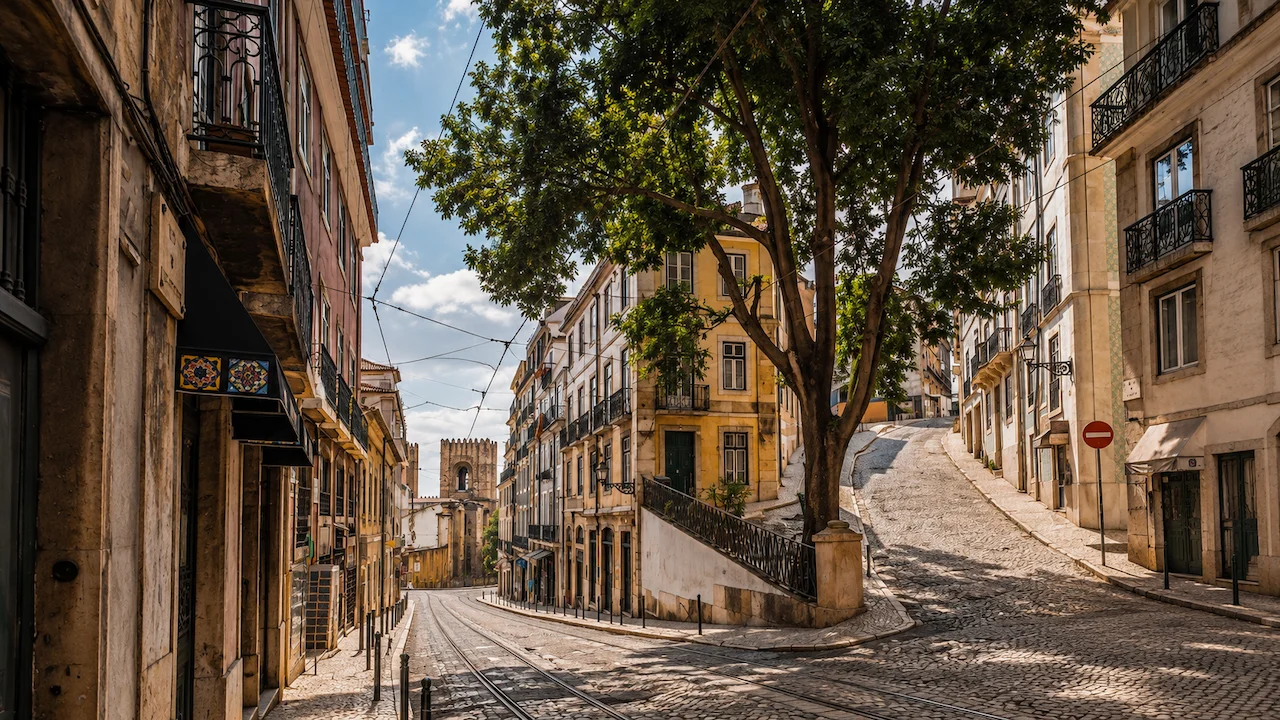
Alfama is the part of Lisbon where getting slightly lost is usually a good thing. Streets turn into staircases, staircases disappear under arches, and a route that looks obvious on a map can suddenly send you around a church, through a tiny square and down a lane barely wide enough for two people.
For a short visit, though, there’s one useful trick: start high and walk downhill.
This two-hour route begins at Miradouro da Graça, above Alfama, then works its way towards the Tagus past monasteries, old residential streets, fado territory and some of Lisbon’s oldest landmarks. You’ll finish at Casa dos Bicos, close to river level.
It gives you the views people come to Alfama for, but also plenty of the quieter streets in between.
Route at a glance
Easy, but expect cobbles, steps and steep lanes.
Morning, before Alfama’s main streets and viewpoints get busier.
If you go inside the museums and churches, give yourself longer. For a two-hour walk, think of them mainly as places to pause, look around and decide which ones deserve a return visit.
01Start at Miradouro da Graça
Start with the whole city in front of you.
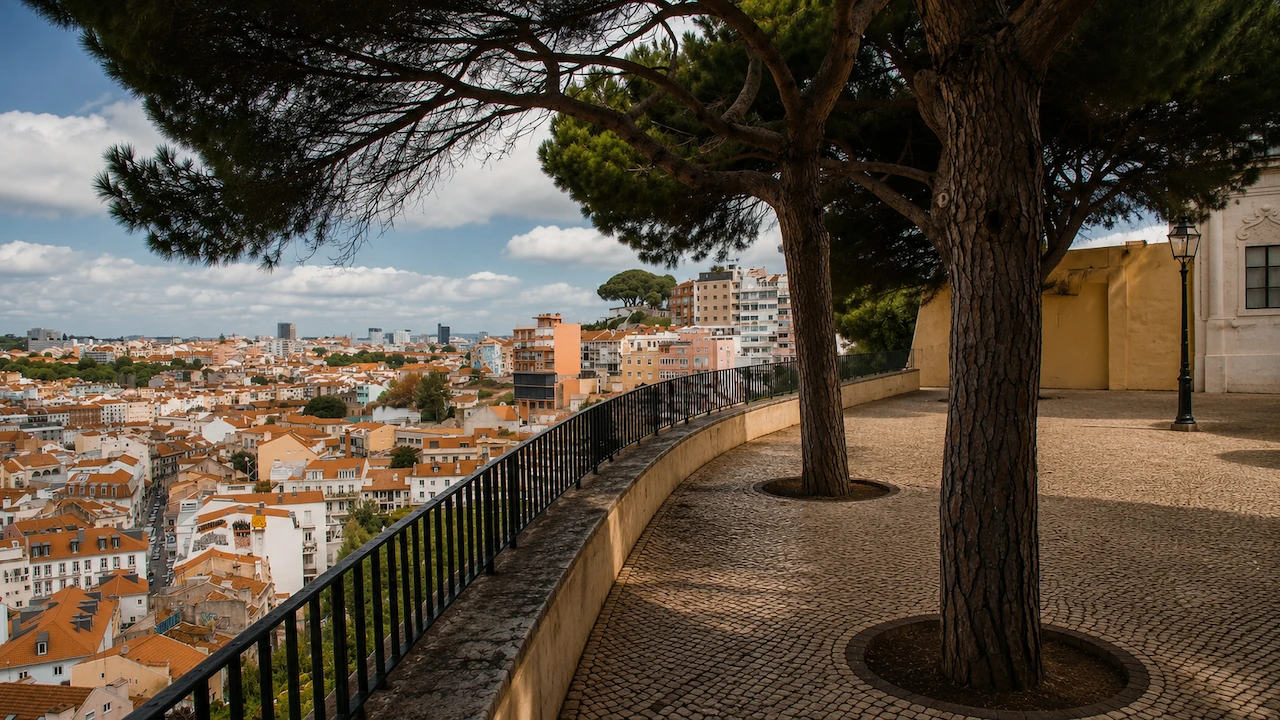
From the terrace at Miradouro da Graça, you can pick out São Jorge Castle, the dense roofs of Alfama and the Tagus beyond them. More importantly, you can see the terrain you’re about to walk through.
At street level, Lisbon often feels like a collection of unrelated climbs, stairways and sudden turns. Up here, the geography is easier to read: hills dropping towards the river, old neighbourhoods wrapped around them, and the flatter centre beyond.
Have a look before you start walking. Over the next two hours, you’ll gradually disappear into the roofs below.
02Mosteiro de São Vicente de Fora
A few minutes downhill brings you to the pale façade of São Vicente de Fora.
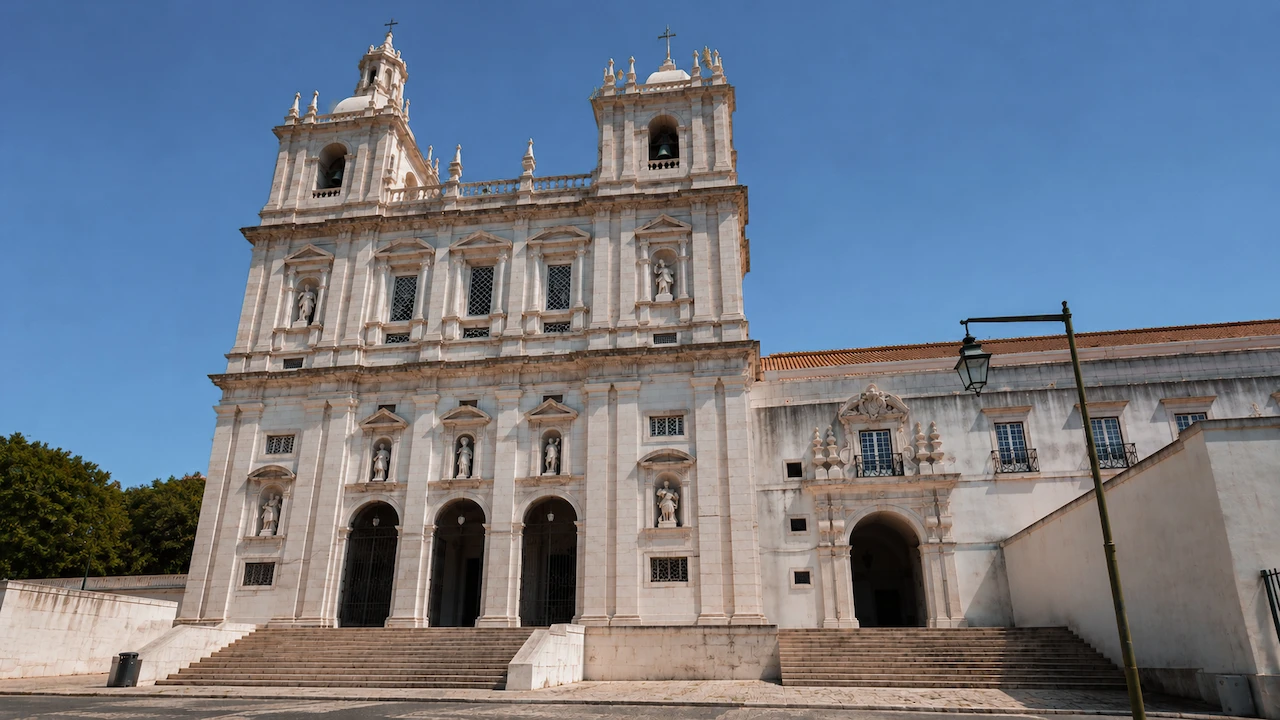
The monastery feels oversized beside the surrounding streets. Behind the façade is a major collection of azulejos, and the complex later became closely tied to the Portuguese royal family, with generations of Braganza monarchs buried here.
You don’t need to go inside — the square is enough to appreciate the sudden change of scale. One moment you’re walking through ordinary neighbourhood streets; the next, an enormous monastery fills your view.
The streets close in again as soon as you leave the square.
03Panteão Nacional
Keep descending and the white dome of the National Pantheon comes into full view.
It’s easy to recognise from viewpoints all over Lisbon. Up close, the more surprising story is how long it took to finish.
There’s even a Portuguese expression, obras de Santa Engrácia, used for something that seems to go on forever. It comes from this building: construction of the church stretched, with long interruptions, across nearly three centuries before it was finally completed and turned into the National Pantheon.
Today it honours prominent figures from Portuguese history and culture.
If you’ve got more than two hours, this is where a visit inside could easily take up the rest of your morning. Otherwise, continue down towards the lower streets of Alfama.
04Museu do Fado
The route reaches one of its lowest points at the Fado Museum.
You don’t have to go inside to understand why it belongs here. Fado grew out of neighbourhoods like Alfama, in taverns, working-class streets and small local venues, long before it became something performed on formal stages.
Around here, start looking for references to singers and fado houses as you walk. At night the neighbourhood sounds very different; in the morning, you get to see these streets before that part of Alfama wakes up.
After the museum, leave the lower streets behind and turn back into the residential maze around São Miguel.
05Igreja de São Miguel
This is where the route starts to feel less like a sequence of monuments and more like Alfama itself.
Around São Miguel, the streets narrow. Houses lean close together, balconies nearly meet above the lanes, and washing hangs overhead. The church gives you a fixed point on the map, but the interesting part is what surrounds it.
Beside the church, look for an old five-storey house whose upper floors push out over the lane. The trick gave builders more room upstairs when there wasn’t enough space to expand at street level.
Look underneath the projecting floor and you can see angled iron struts holding it up like a canopy. The windows don’t line up neatly either, and the upper floors look as if each one was added whenever someone needed a little more room.
There are other houses with projecting upper floors around Alfama too. They haven’t all survived untouched, but once you know what to look for, you start spotting traces of the older city in ordinary residential streets.
Take your time through this stretch. Here, the streets between the stops matter as much as the stops themselves.
06Igreja de Santa Luzia
The narrow lanes eventually open onto Santa Luzia, where the terrace can steal more attention than the church.
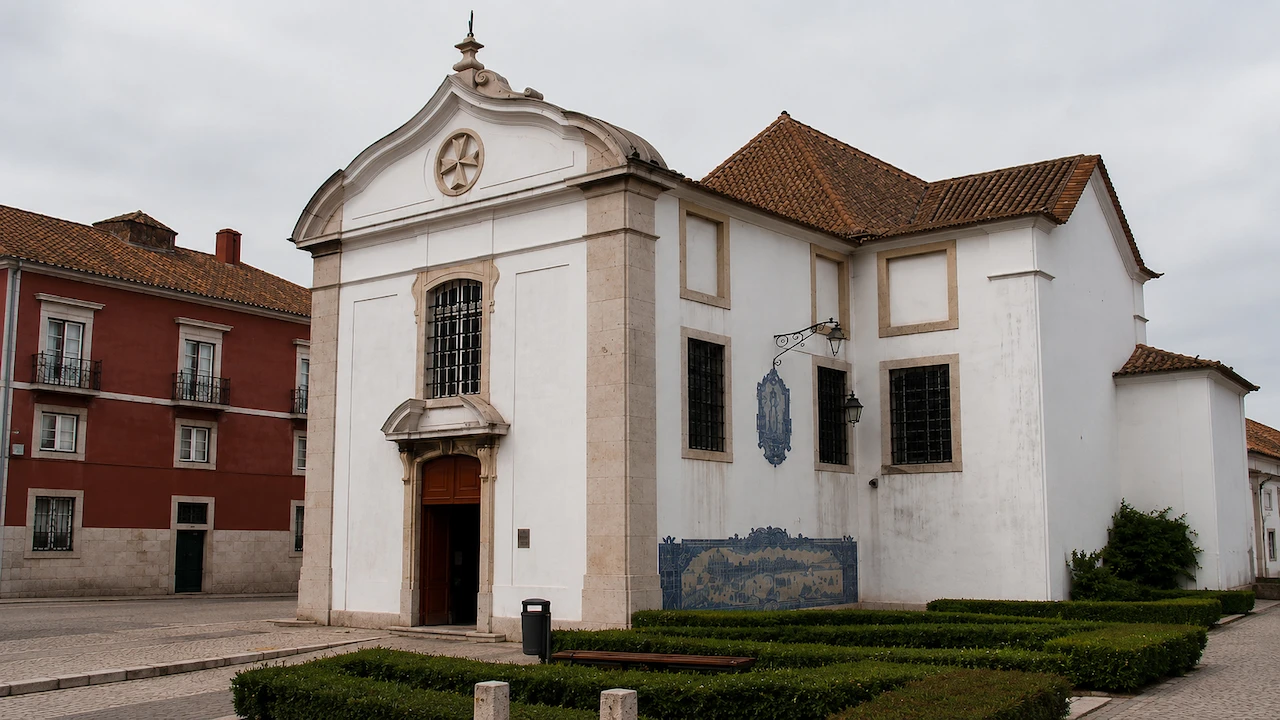
Blue-and-white azulejo panels line the walls, bougainvillea often spills across the pergola, and beyond the terrace the roofs of Alfama tumble towards the Tagus.
It’s an obvious photo stop, but take a minute to look at the shape of the neighbourhood. Alfama still appears irregular and tangled compared with the straight streets of central Baixa. Large parts of the centre were rebuilt according to a new plan after the earthquake of 1755; here, much more of the older street pattern survived.
The route now begins its final descent towards the cathedral.
07Sé de Lisboa
Lisbon Cathedral doesn’t look delicate.
Its thick walls and two towers make the Romanesque façade feel defensive — fitting for a building that’s spent nearly nine centuries being damaged, altered, repaired and rebuilt.
The cathedral sits on one of Alfama’s busiest routes, and this is one of the classic places to watch tram 28 squeeze past a building that was standing centuries before trams existed.
Don’t just photograph the façade from directly in front. Walk a little down the street and look back: the cathedral looks even more massive when you see how tightly the city has grown around it.
08Igreja de Santo António
Right next to the cathedral is a much smaller church dedicated to a saint the whole world knows.
Most people call him Saint Anthony of Padua, but Lisbon considers him a local. According to tradition, he was born on this spot in 1195, and the church stands over the place associated with his family home.
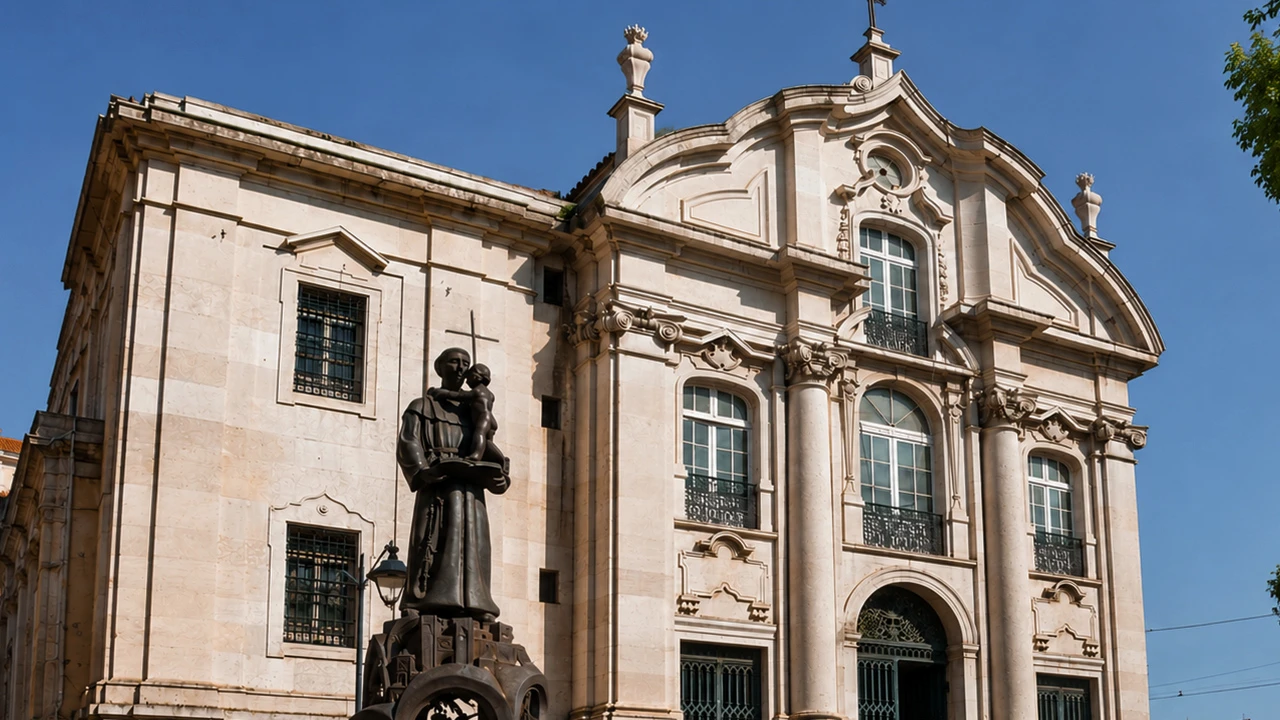
That’s why Saint Anthony matters so much here. In June, Lisbon’s biggest street celebrations are held around his feast day, and Alfama becomes one of the centres of the party.
On an ordinary morning, though, the little square can feel surprisingly calm considering how close you are to some of the city’s busiest sights.
One last downhill stretch takes you towards the Tagus.
09Finish at Casa dos Bicos
The last stop looks as though someone covered a Renaissance palace in stone pyramids.
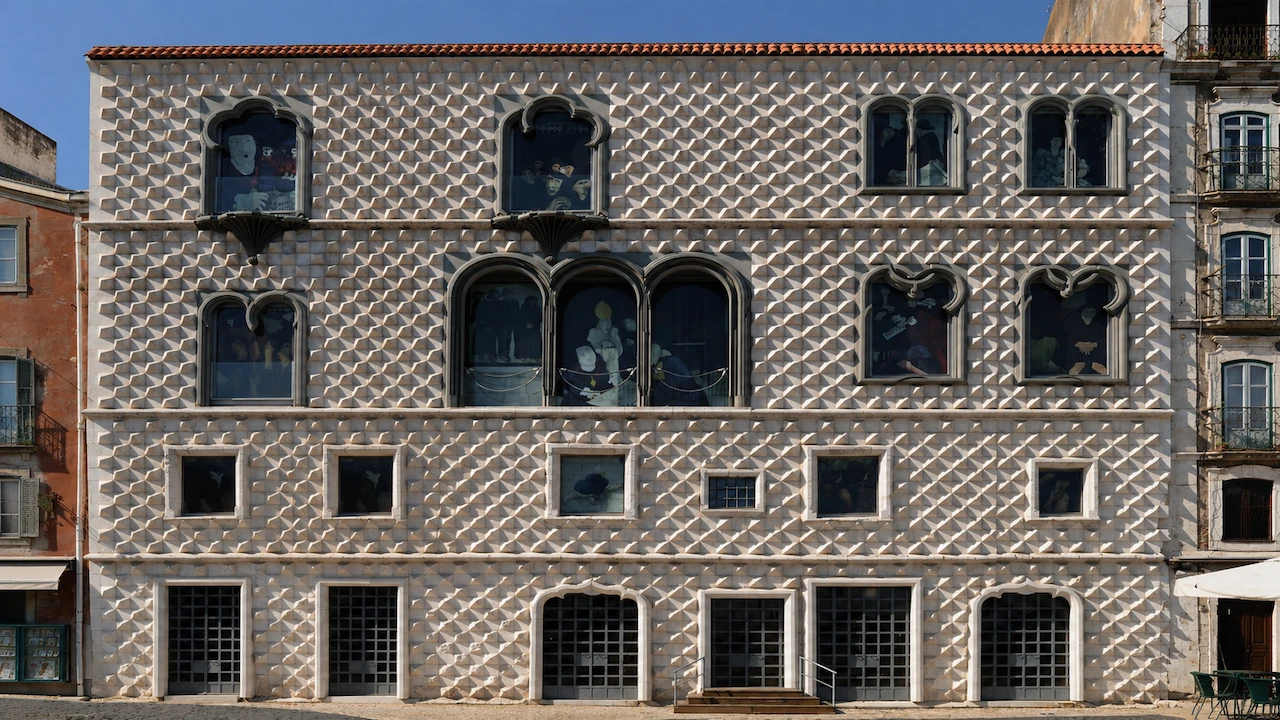
Casa dos Bicos was designed with a façade of pointed stones intended to resemble diamonds. Locals had their own interpretation: they looked like bicos — spikes or beaks.
The name stuck, and five centuries later it’s still simply Casa dos Bicos, the House of Spikes.
By now the steep descent is over. The Tagus is just ahead, and the tightly packed streets of Alfama rise behind you.
Two hours earlier, you were looking down at all of this from Graça.
Now you’re standing at the bottom of it.
If you want to keep going
Praça do Comércio is only a short walk west from Casa dos Bicos, so continuing into Baixa is easy if you’ve still got time.
Or turn around for a moment before you leave. Somewhere above those roofs is the terrace where you started.
Prefer an evening walk? Lisbon evening walk: Chiado, Baixa and the riverfront in 2 hoursWant the full stories?
Every stop on this walk is included in the Nadoloni Lisbon audio tour — along with many more places across the city. If you want to go beyond the short version here, open the app and listen to the full story behind each stop as you walk.
The first five stories are free.
Two self-guided audio walks, 89 stops, and the first five stories on each route free.