
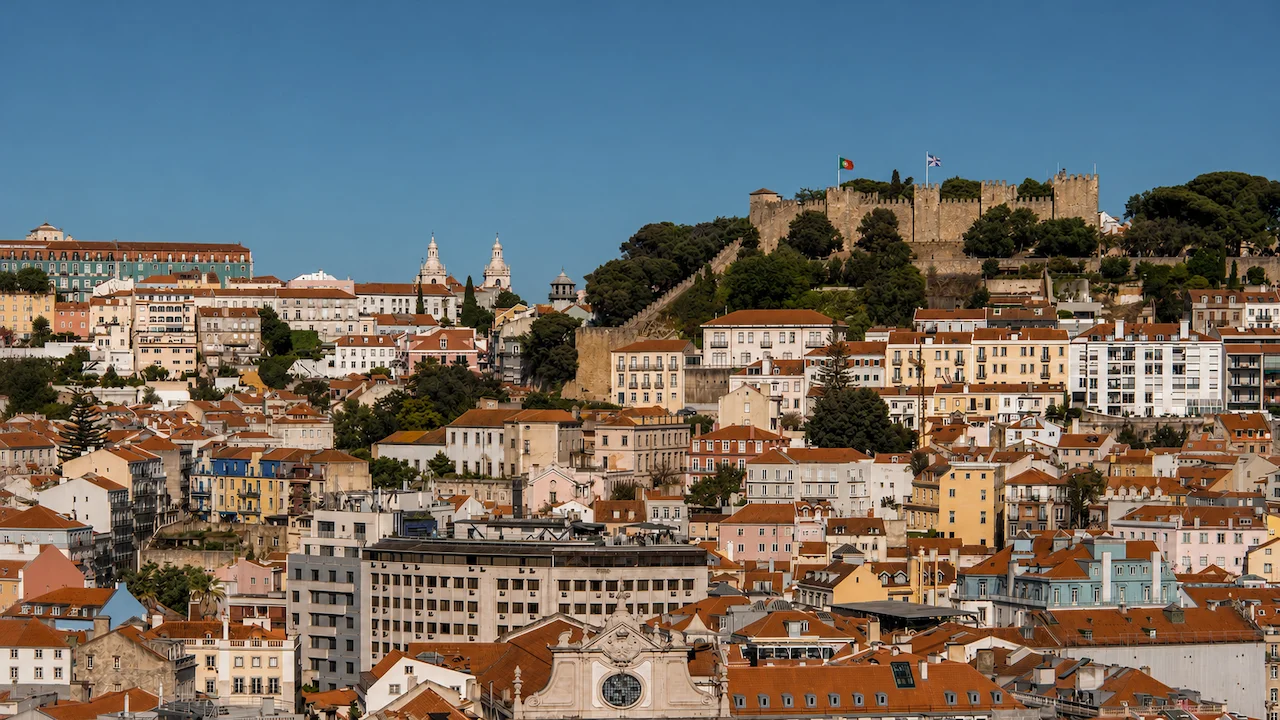
Start above central Lisbon at Miradouro de São Pedro de Alcântara and walk downhill through Chiado and Baixa to the Tagus, finishing at Mercado da Ribeira in Cais do Sodré.
Lisbon is particularly easy to explore this way in the evening: start high and let the route take you downhill.
This walk begins with a view across the city, passes one of Lisbon’s most remarkable churches, an old bookshop and café, crosses Praça do Comércio and ends somewhere you can simply stop for dinner.
Route at a glance
Easy. Mostly downhill.
Late afternoon or evening. The route finishes in Cais do Sodré, so it’s easy to stay for dinner afterwards.
If you walk continuously, the route takes a little over an hour. Two hours gives you time to stop at the viewpoint, step inside São Roque, browse Bertrand and look around along the way.
01Start at Miradouro de São Pedro de Alcântara
Start with Lisbon spread out below you.
From the terrace, you can look across the centre towards São Jorge Castle and the hills on the other side of Baixa.
It is also a useful place to understand the walk before you begin. From here, most of the route gradually descends through the city towards the Tagus.
Look for the tiled panorama that identifies the landmarks in front of you, then turn away from the view and head towards São Roque.
02Igreja de São Roque
A few minutes later, you reach a church whose exterior gives very little away.
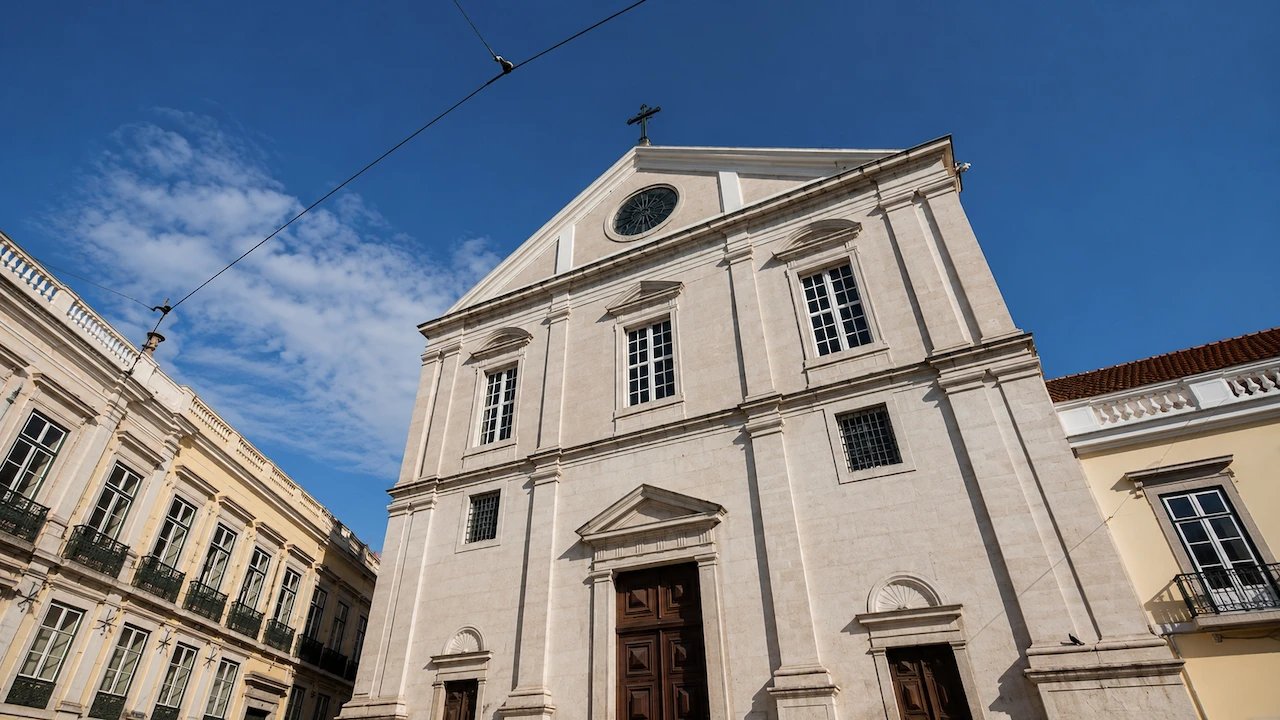
Inside, São Roque is filled with painted ceilings, gilded decoration and richly worked side chapels.
The most extraordinary is the Chapel of St John the Baptist. King João V commissioned it in Rome in the 18th century. It was built there using marble and other costly materials, then dismantled, transported to Lisbon and reconstructed inside the church.
In other words, one of the most elaborate rooms on this walk arrived in Lisbon in pieces.
If the church is open, go inside before continuing downhill towards Chiado.
03Bertrand Bookshop
On Rua Garrett, you will pass Livraria Bertrand, recognised by Guinness World Records as the world’s oldest operating bookshop.
It was founded in 1732. The original premises were destroyed in the 1755 earthquake, and the business later moved to Rua Garrett, where it has remained since the 18th century.
The entrance is modest, but the shop stretches surprisingly far into the building.
Even if you are not planning to buy a book, it is worth walking through.
04Café A Brasileira
A few steps further along Rua Garrett is another Lisbon institution.
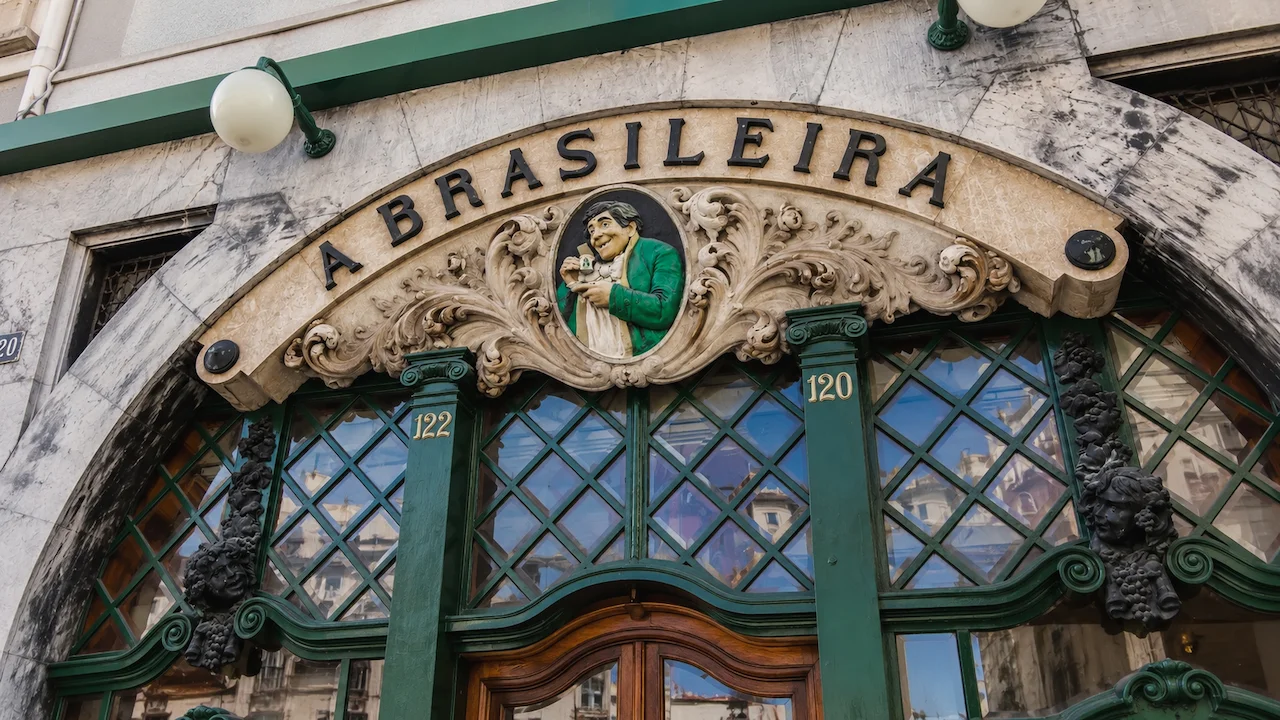
A Brasileira opened in 1905 and became a meeting place for writers, artists and intellectuals in early 20th-century Lisbon.
Its most famous association is with Fernando Pessoa, whose bronze figure now sits permanently at a table outside.
Today people queue to take photographs beside him. A century ago, cafés like this were working parts of the city’s literary life — places where writers met, argued and planned publications.
From here, continue downhill towards Baixa.
05Rua Augusta Arch
Walk through Baixa until the Rua Augusta Arch fills the end of the street.
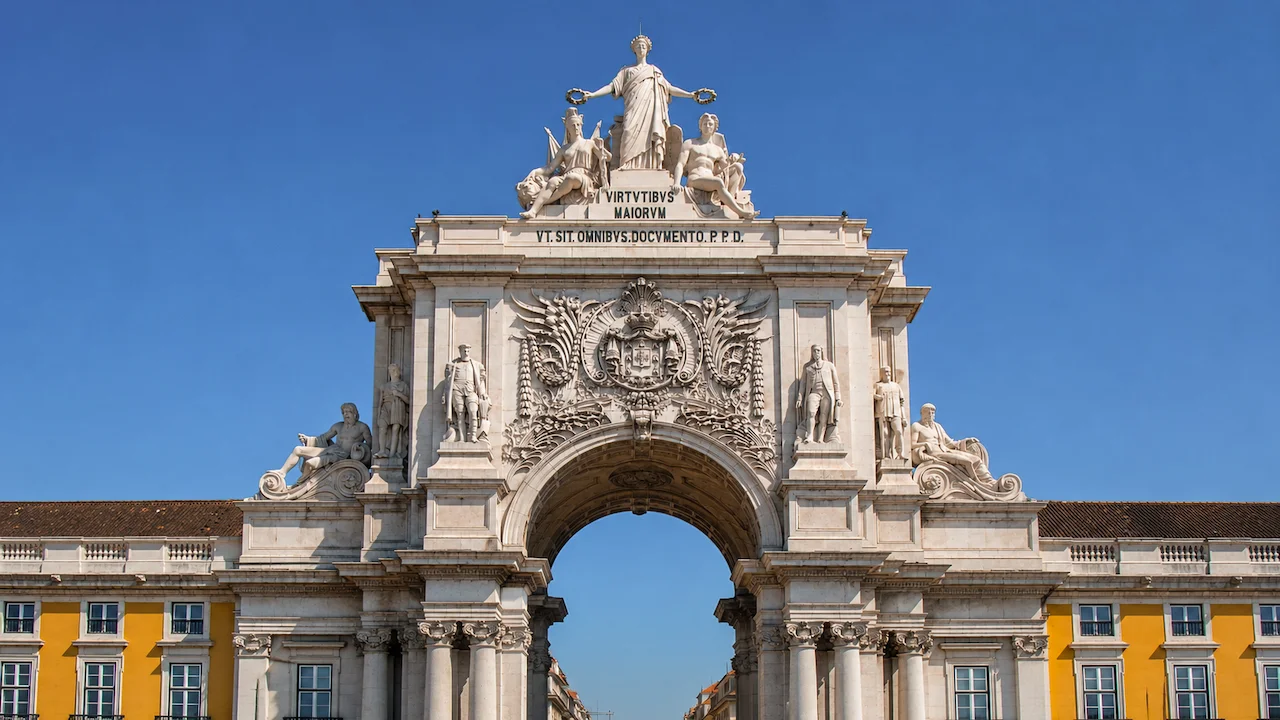
The streets around you are unusually straight for old Lisbon. That is not accidental.
After the earthquake of 1 November 1755 destroyed much of the lower city, Baixa was rebuilt according to a new plan, with regular blocks and broad, ordered streets.
The arch became the monumental entrance to Praça do Comércio. Look up before passing underneath: among the figures above are Vasco da Gama and the Marquis of Pombal, closely associated with Lisbon’s reconstruction.
Then walk through.
06Praça do Comércio
On the other side, the city suddenly opens onto the Tagus.
This is Praça do Comércio, although you will also hear Lisbon residents call it Terreiro do Paço — Palace Square.
The older name remembers what stood here before 1755: the Ribeira Palace, the principal royal residence in Lisbon.
The earthquake and subsequent fires destroyed it. The enormous square you see today belongs to the city that was built afterwards.
Walk towards the river before turning west towards Cais do Sodré.
07Rua Nova do Carvalho — Pink Street
Eventually you will reach a street whose pavement makes it difficult to miss.
Rua Nova do Carvalho, better known as Pink Street, is now one of Lisbon’s best-known nightlife streets.
That identity has changed considerably over time. Cais do Sodré was historically a port district, and the streets around here were filled with sailors, boarding houses, bars and clubs.
The pink pavement came much later, as Rua Nova do Carvalho was transformed into an entertainment district.
At busy times there is no need to linger. Your final stop is only a few minutes away.
08Finish at Mercado da Ribeira
Finish beneath the iron roof of Mercado da Ribeira.
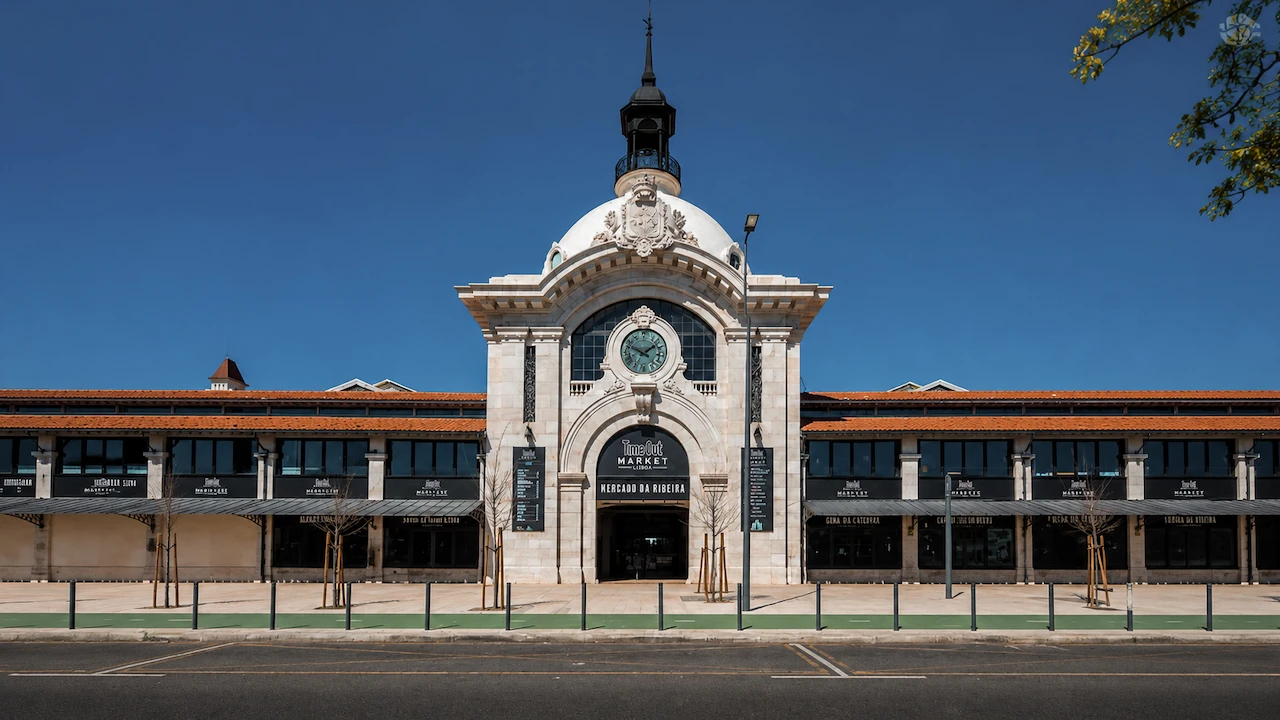
The market has occupied this part of Lisbon since the 19th century and was long one of the city’s important places for buying fresh produce.
Part of the building still functions as a traditional market. Since 2014, another part has been home to Time Out Market Lisboa, with restaurants and food counters gathered under the same roof.
It also gives the walk a useful ending.
You began above the centre looking across Lisbon.
Just over three kilometres later, you are almost at river level — and already somewhere you can sit down for dinner.
If you want to keep going
The Tagus is only a few minutes away. From Cais do Sodré, you can continue west along the waterfront towards Santos if you still feel like walking.
Or stop here. Metro, trains, ferries, restaurants and bars are all close by.
Prefer a morning walk? A morning walk through Alfama: a 2-hour self-guided routeDon’t just follow the pins
You can walk this route with nothing more than a map.
But the pins do not tell you that a chapel inside São Roque was made in Rome and transported to Lisbon in pieces. They do not tell you why Baixa suddenly follows a grid, or that the enormous square beside the Tagus once held a royal palace.
Knowing those stories changes what you notice while you walk.
Every stop on this route is included in the Nadoloni Lisbon audio tour — along with many more places across the city. Open the app to hear the full story behind each stop as you walk. The first five stories are free.
Two self-guided audio walks, 89 stops, and the first five stories on each route free.